

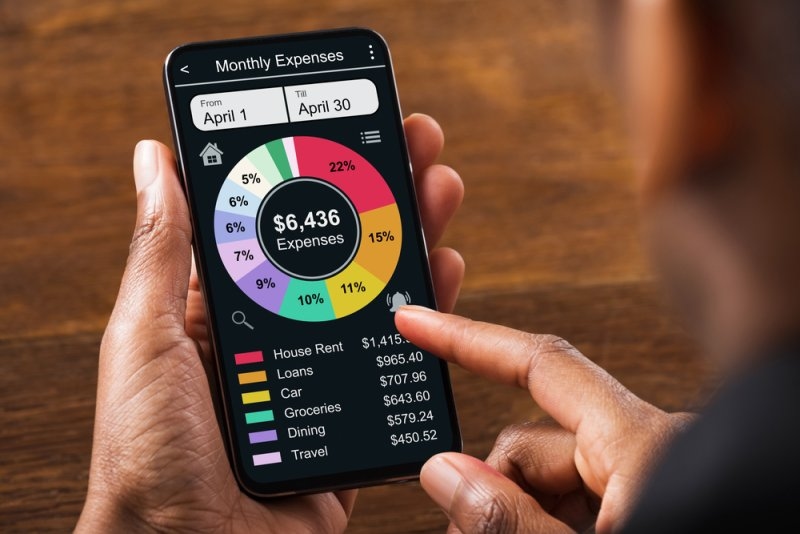
When you really understand where your money goes, making everyday choices about spending just feels easier. Most folks know their income, but it’s the takeout, subscriptions, random Amazon orders, or quick snacks that sneak up on you. Those small purchases quietly pile up. Tracking your monthly expenses isn’t about killing every bit of fun—it just helps you spot patterns, set limits that actually make sense, and save a little more without feeling miserable.
Good news: you don’t need fancy software or to spend hours entering data. Use whatever method feels easiest. In this blog, you’ll learn to track your expenses, pick tools that fit your style, build a budget you can actually stick to, and form habits you won’t hate.
The ideal system is one that could be maintained over the busy weeks of the month, rather than at its beginning.
An expense tracker keeps track of where your money is going, when you spend it, and how much is left in each spending category. It can be done using a mobile application, spreadsheet, or notebook. It's key to record the transactions on a regular basis rather than trying to remember them at the end of the month.
Begin with the most general categories like housing, groceries, transportation, utilities, subscriptions, eating out, debt, and savings. Limit the list to only a handful of items. With each new purchase requiring a new category, it becomes difficult to track and typically turns off.
If you are looking for an overview, for example, a quick overview of coffee, restaurants, and food delivery under dining. If that category is always above your goal, divide them into smaller groups afterwards.
First, start with actual expenses, not an ideal budget, when tracking your monthly expenses. Check bank statements and credit card bills for the month prior. Include cash purchases that are not recorded in those transactions.
Next, determine three items: bills you have to pay, bills you can afford to pay but don't have to, and bills you want to save or pay off. This enables all dollars to have a purpose and has no intention of claiming all expenses are predictable.
An effective program is roughly 10 minutes a few days. It's much easier to be able to make smaller reviews of things for the small part, as opposed to trying to assemble an entire month from receipts broken up into pieces.
Don't Miss: Is the 4% Retirement Rule Still Safe for You in 2026?
A monthly budget planner transforms your financial logs into spending choices, enabling you to recognize what to shift ahead of time and end up short.
A budget tracker helps to compare the planned amount to actual expenditures. The first step is to budget take-home pay; the next is to set limits for fixed expenses; and finally, reasonable limits for financial goals and variable expenses.
Let's say an individual makes $4,000 a month after taxes. He or she may expect to spend $1,400 on housing, $450 on food, $250 on transportation, and $300 on going out for some entertainment and eating out. The money left over after bills, savings, debt payments, and other expenses are accounted for will be used to pay for other bills, to build savings, or to pay off debt.
The figures in this section are provided as examples, not a recommendation for use as a maximum by each home. Needs of families and housing costs are different. Your funds will be for your usage.
Both of these tools assist you with the "how" of tracking monthly expenses, just in different ways, depending on your habits.
| Feature | Monthly expenses spreadsheet | Budgeting app |
|---|---|---|
| Setup | Manual categories and formulas | Usually guided setup |
| Transaction entry | Manual or imported data | Often automatic bank syncing |
| Customization | High | Depends on the app |
| Cost | Often free | Free and paid options |
| Best for | People who want control | People who prefer automation |
Using a spreadsheet provides flexibility, and an app can help save repetitive tasks. While neither ensures improved money habits, both can help prevent them from getting worse. Select depending on the technique used.
Suggested Reading: How an Unsecured Loan Can Help You Achieve Goals?
Note that when you write out a monthly expenses spreadsheet, it will show you what you spend each month and if you have several months to look at in addition to one month.
Plan columns to record the date, description, category, amount, and payment method, and use the column—planned to mark if the spending was a planned expense or not. Include a separate summary table to present the budgeted, actual, and difference amounts for each category.
For instance, if you have set a $400 limit on your grocery spending, but your spending amounted to $465, the spreadsheet presents a $65 overspend. You can then see if prices went up, you welcomed visitors, or your purchases of a few unexpected items raised the figure.
Do basic calculations to add up costs by type. Fill in the list weekly, and use a column for returns to prevent this from skewing the numbers of purchases.
The best way to track monthly spending is to look for repeat behavior. The expensive groceries could indicate high food prices, but the temptations of the convenience stores may show something that's being overcome.
Make a comparison of at least 2 or 3 months before any large changes. An expensive month might be insurance costs per year, travel, or medical expenses. More consideration ought to be given to a recurring pattern than a bill that is unusual.
Rumors about good budgeting advice include repeating the advice and not imposing rules that break down after a single unforeseen expense.
Put boundaries in place before you spend anything, and review monthly progress. Make some cuts to discretionary spending as soon as you notice that the food budget is spending more than 80% of the budget by the second week, not at some point when it's getting to be an uncomfortable level.
Here are budgeting tips that will come in handy:
June's habits make budgeting monthly not a burden but an awareness of issues and time to react.
Though apps can help keep records sorted, they won't always be effective and may need account access for successful banking.
While comparing tools, seek out comprehensive portfolios of reports by category, repeating charges tracking, export choices, security safeguards, and charges that are price range friendly. Some applications allow for the use of several accounts, while others are geared towards the limits of basic spending.
Review how money is handled by the app, whether the app supports multi-factor authentication, and what permissions you allow. Never give out your bank information on an untrustworthy site.
Once configured, you can check on auto-imported transactions weekly. Double counting once you transact with your own accounts should not be counted, and the credit card payment counted should not be double counted if the individual card payment is included.
Also Read: 7 Smart Steps to Achieve Financial Freedom and Build Wealth
The trick to expense tracking is to have honest records, keep limits reasonable to what you actually spend, and conduct frequent check-ins. Get rid of the spreadsheet, the fancy budget software everyone's talking about. You just need to know where your money and spending are going and have the firm resolve to change it all if it's getting out of control.
Keep it simple—begin with a few key categories, make sure to record all transactions, and review them monthly. With perseverance, you will begin to make the right choice of expenses, eliminate expenses that are unnecessary, and saving won’t seem so impossible. To put it simply, you want to start giving your money a plan before planning to give it to your money.
Check your transactions two or three times a week. If your app can import them automatically, turn that on. Then, take a quick look once a week to spot mistakes before they snowball.
No need. Just add your cash purchases to the same tracker you use for everything else—use a “cash” category or mark the payment method. That way, your monthly total actually makes sense.
Sit down and agree on your shared categories, your limits, and who’s actually going to enter each expense. Use a shared spreadsheet or budgeting app, but make sure you both know how it works and check in together regularly.
Start by splitting your costs into essentials and things you can adjust. Cut where you can and see if any bills are negotiable. If you’re still coming up short, look at ways to bring in more money and reach out to a legit nonprofit credit counselor before debt really gets out of hand.
Figure out the yearly total, divide it by 12, and set aside that amount every month. So, if your insurance is $600 a year, you save $50 a month. Simple and no surprises later.
This content was created by AI